Introduction: Turning data into compassionate impact
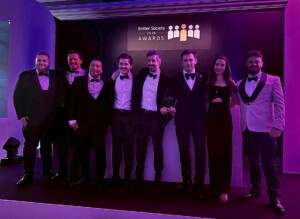
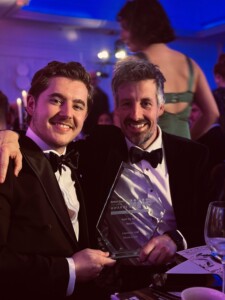
Last week, esynergy and Marie Curie won the Tech for Good Award at the Better Society 2026 Awards, which recognises commercial organisations helping create a more equal, ethical and sustainable world. The award reflects what is possible when technology is applied with real purpose.
Working together, esynergy and Marie Curie built modern data foundations that strengthen clinical services, improve fundraising insight and support better decision-making across the organisation. The work is helping teams spend less time reconciling fragmented information and more time focusing on delivering care and support to people living with terminal illness across the UK.
This is what technology for good looks like in practice: turning fragmented data into trusted insight, and trusted insight into meaningful human impact.
Wider context: Challenges facing the charity sector
The charity sector is facing a period of significant change. Patterns of giving are evolving, operational costs continue to rise and organisations are under increasing pressure to do more with fewer resources while maintaining trust, transparency and measurable impact.
Many charities are also managing increasingly complex technology estates built over many years. Data is often spread across disconnected systems, making it difficult to gain a joined-up understanding of supporters, services and operations. Without a unified view of data, organisations struggle to understand supporter behaviour, optimise fundraising, coordinate services or clearly demonstrate impact. Valuable staff time is often spent manually gathering and validating information instead of acting on insight.
For charities operating under growing financial and operational pressure, trusted and accessible data is becoming essential infrastructure. The organisations that succeed over the next decade will be those that can modernise legacy systems, embrace scalable cloud platforms and create flexible data foundations that evolve with changing organisational needs.
The challenge: Fragmented systems slowing critical decisions
Marie Curie is the UK’s largest provider of end-of-life care, supporting people with terminal illness through hospices, community nursing and partnerships with the NHS.
Like many large organisations, its data landscape had evolved over time into multiple disconnected systems. Donor and volunteer information was spread across several platforms, while operational and clinical data existed across more than twenty systems.This fragmentation made reporting slow, manual and difficult to trust. Teams often spent significant time gathering and validating information before insight could even begin.
As a result, it became harder to optimise fundraising activity, coordinate operational services and gain consistent visibility across the organisation.Marie Curie needed more than improved reporting. It needed a trusted and scalable data foundation capable of supporting fundraising, operational decision-making and future innovation.
Our approach: Building a single customer view for impact
Partnering with esynergy, Marie Curie began its transformation journey by building a cloud-based Single Customer View.
Within six weeks, more than one million donor and volunteer records had been consolidated into a unified platform, creating a 360-degree view of supporter activity and engagement. Using Microsoft Azure, Databricks and the open-source Splink framework, esynergy helped establish a scalable and reliable data foundation capable of supporting advanced analytics, segmentation and future AI capabilities.
The impact was immediate.
Fundraising teams gained a far clearer understanding of supporter engagement across channels, enabling more targeted campaigns and more meaningful interactions. Teams could segment supporters more effectively based on interests, behaviour and engagement history while improving operational efficiency and reducing duplication.
Importantly, the platform created a trusted foundation that can continue evolving alongside Marie Curie’s wider digital strategy.
Modernising Caring Services through cloud and data
The transformation did not stop with fundraising.
Marie Curie also needed to modernise how operational and clinical data was managed across Caring Services. Important information was spread across multiple systems, making reporting slow, manual and difficult to reconcile. Teams often spent significant time gathering and validating data before insight could even begin.
Working alongside Marie Curie teams, esynergy helped design a modern cloud-based data platform. This moved the organisation away from ageing on-premise infrastructure towards a more scalable, resilient and future-ready architecture. The goal was not simply to move systems into the cloud. It was to create a trusted foundation for operational reporting, service planning and future innovation.
By bringing together data from multiple care and operational systems into a unified platform, Marie Curie is improving visibility across services while reducing technical debt and manual reporting effort. It also helps teams spend less time reconciling spreadsheets and more time focusing on delivering and improving care. It also creates foundations for future capabilities including predictive analytics, anomaly detection and AI-assisted insight.
As Neal Venables, Head of Engineering at Marie Curie, explains:
“By bringing supporter and clinical data into a single, governed insight capability, we have changed how decisions are made across Marie Curie. Predictive models now guide fundraising activity, operational insight is available when teams need it, and reporting to NHS partners is faster and more consistent. Crucially, these tools are trusted and actively used because they were designed with transparency, validation and human oversight at the core.”
Why modern data platforms matter for charities
Modern data platforms help organisations:
- improve fundraising effectiveness
- reduce operational inefficiency
- strengthen governance and reporting
- improve resilience and scalability
- create better experiences for supporters and service users
- build foundations for future AI and automation capabilities
For charities balancing increasing demand with finite resources, these capabilities are becoming critical.
The future of technology for good
Winning the Tech for Good Award is an important milestone for both esynergy and Marie Curie, but the real value lies in what these platforms enable over the long term.
For charities, data is no longer simply a reporting requirement. It is becoming a core operational capability that underpins fundraising, service delivery, governance and innovation.
The organisations that thrive over the next decade will be those that can turn fragmented information into trusted insight, and trusted insight into better decisions, better services and better outcomes for the people they support.
That is what technology for good should deliver.